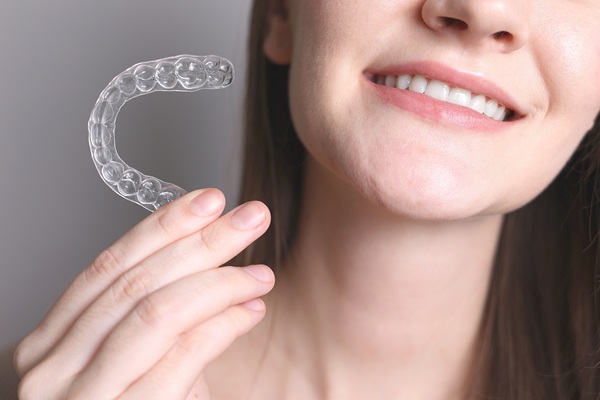
The popularity of Invisalign® has grown as the treatment has proven to produce successful and positive results. Additionally, the treatment process is unlike any other. The actual process is a lot simpler than traditional approaches, and there are benefits that come with Invisalign® too.
One more important part of Invisalign® treatment is the need to remain disciplined with wearing the actual aligners. Because Invisalign® is removable, wearers are encouraged to keep the actual piece in for 22 hours a day. The only time the aligners should be removed is to eat and for oral hygiene. Keep reading to find out more.
Oral hygiene during Invisalign® treatment
Below is a quick overview of what one's oral hygiene routine should look like during the Invisalign® treatment process. This information may be helpful to those wearing Invisalign®.
Brushing
The most important oral hygiene tip to follow is to brush! Of course, this is crucial even outside of Invisalign® treatment. However, it is especially important during teeth straightening because the teeth are constantly shifting, thus resulting in changes in the mouth. Because of the shift that occurs during Invisalign®, the teeth may have more openings in small areas that can hold food debris. This puts the teeth and gums at risk of developing cavities.
General dentists recommend using a soft or medium-bristled toothbrush twice a day; however, after every meal is also highly recommended. When food debris is immediately removed, there is a lower chance that cavities will develop.
Flossing
Flossing is just as important as brushing, especially when undergoing Invisalign® treatment. Flossing keeps food debris away from the gums while also ensuring that the teeth stay in good shape too. Generally speaking, flossing can be done once a day; however, with Invisalign® treatment, it is best to do it after eating. The teeth become enclosed by the aligners immediately after eating, which is why flossing is important. Without flossing, any stuck food debris will have time to negatively impact the teeth and gums.
Rinsing
Rinsing is a big part of maintaining good oral hygiene during Invisalign® treatment. As stated earlier, the teeth and gums become immediately enclosed after eating. Rinsing the mouth after eating can be helpful in removing any excess food debris.
It may not be possible to brush and floss after eating every time, especially if the meal is at a restaurant or at a family member's home. Rinsing allows for some oral hygiene to be done until brushing and flossing can be done. Water is the best option as it clears the entire oral cavity and washes anything away without harming the teeth and gums, as soda or sugary beverages could.
Find out more about Invisalign®
It is important to follow the tips that are listed above when undergoing Invisalign® treatment. Without good oral hygiene, wearers put their oral health at risk, which can result in the need for restorative work while also undergoing Invisalign®. To learn more about Invisalign® and the requirements for oral hygiene, reach out today.
Request an appointment here: https://sharmadentalcenter.com or call Sharma Dental Center at (925) 993-1121 for an appointment in our Dublin office.
Check out what others are saying about our dental services on Yelp: Invisalign in Dublin, CA.
Related Posts
Considering Invisalign® for teeth straightening needs? With the help of a general dentist, anyone needing to have crooked or crowded teeth corrected can undergo Invisalign® treatment. This method of teeth straightening is one that offers convenience and ease throughout the process. Keep reading to find out more!Below is a quick overview of Invisalign® and how it can…
Wearing clear braces can make daily brushing and flossing feel a little more complicated. Food can collect around brackets, attachments, or along the edges of clear aligners. Fortunately, with a simple routine, it is possible to keep teeth clean and gums healthy throughout treatment.Brushing is one of the most important parts of clear braces care.…
Clear braces are becoming more common among patients of all ages. In past years, orthodontists chose traditional metal braces to straighten crooked teeth. However, there are advantages to using clear options instead. If you do not want your orthodontic treatment to hinder your smile, you should not have to worry. Repair your teeth without anyone…
Are you tired of loose dentures or tooth loss that impacts your daily life? All-on-4 implant treatment from a restorative dentist provides a permanent solution to restore your smile. Missing an entire arch of teeth changes everything from speaking to chewing and eating. Fortunately, modern restorative dentistry provides a straightforward way to a healthy and…